Friday, March 27, 2020

Saturday, March 21, 2020
World Water Day

World Water Day is an annual UN observance day (22 March) that highlights the importance of freshwater. The day is used to advocate for the sustainable management of freshwater resources.The theme of each day focuses on topics relevant to clean water, sanitation and hygiene (WASH), which is in line with the targets of Sustainable Development Goal 6.The UN World Water Development Report (WWDR) is released each year around World Water Day.
UN-Water is the convener for World Water Day and selects the theme for each year in consultation with UN organizations that share an interest in that year's focus.The theme for 2020 is "Water and Climate Change" and explores how the two issues are inextricably linked.In light of the growing COVID-19 pandemic, the 2020 campaign also promoted messages around hand washing and hygiene and gave guidance on staying safe while supporting the campaign.

The 2019 theme was "Leaving no one behind".Previous themes for the years 2014 to 2018 were "Water and energy", "Water and Sustainable Development", "Water and Jobs'", "Why waste water?" and "Nature for Water".World Water Day is celebrated around the world with a variety of events. These can be theatrical, musical or lobbying in nature. The day can also include campaigns to raise money for water projects. The first World Water Day, designated by the United Nations, was in 1993.
Friday, March 20, 2020
Internet

The Internet (portmanteau of interconnected network) is the global system of interconnected computer networks that uses the Internet protocol suite (TCP/IP) to link devices worldwide. It is a network of networks that consists of private, public, academic, business, and government networks of local to global scope, linked by a broad array of electronic, wireless, and optical networking technologies. The Internet carries a vast range of information resources and services, such as the inter-linked hypertext documents and applications of the World Wide Web (WWW), electronic mail, telephony, and file sharing.
The origins of the Internet date back to the development of packet switching and research commissioned by the United States Department of Defense in the 1960s to enable time-sharing of mainframe computers.The primary precursor network, the ARPANET, initially served as a backbone for interconnection of regional academic and military networks in the 1970s. The funding of the National Science Foundation Network as a new backbone in the 1980s, as well as private funding for other commercial extensions, led to worldwide participation in the development of new networking technologies, and the merger of many networks.The linking of commercial networks and enterprises by the early 1990s marked the beginning of the transition to the modern Internet, and generated a sustained exponential growth as generations of institutional, personal, and mobile computers were connected to the network. Although the Internet was widely used by academia in the 1980s, commercialization incorporated its services and technologies into virtually every aspect of modern life.

Most traditional communication media, including telephony, radio, television, paper mail and newspapers are reshaped, redefined, or even bypassed by the Internet, giving birth to new services such as email, Internet telephony, Internet television, online music, digital newspapers, and video streaming websites. Newspaper, book, and other print publishing are adapting to website technology, or are reshaped into blogging, web feeds and online news aggregators. The Internet has enabled and accelerated new forms of personal interactions through instant messaging, Internet forums, and social networking. Online shopping has grown exponentially both for major retailers and small businesses and entrepreneurs, as it enables firms to extend their "brick and mortar" presence to serve a larger market or even sell goods and services entirely online. Business-to-business and financial services on the Internet affect supply chains across entire industries.
International Day of Forests

The International Day of Forests was established on the 21st day of March, by resolution of the United Nations General Assembly on November 28, 2012.Each year, various events celebrate and raise awareness of the importance of all types of forests, and trees outside forests, for the benefit of current and future generations.Countries are encouraged to undertake efforts to organize local, national, and international activities involving forests and trees, such as tree planting campaigns, on International Day of Forests. The Secretariat of the United Nations Forum on Forests, in collaboration with the Food and Agriculture Organization, facilitates the implementation of such events in collaboration with governments, the Collaborative Partnership on Forests, and international, regional and sub regional organizations.International Day of Forests was observed for the first time on March 21, 2013.

The catalyst for Forest Day was a casual conversation in Oxford, England, in February 2007, between two scientists who felt the world was underestimating the importance of forests in mitigating carbon emissions and saw a glaring need for the latest forestry research and thinking to inform global policy makers and UNFCCC negotiators. They did not foresee that the conference would become one of the most influential global events on forests and climate change today.
Thursday, March 19, 2020
International Day of Happiness

The International Day of Happiness is celebrated worldwide every year on 20 March, and was originally conceptualized and founded in 2006 by Jayme Illien, CEO of the United Nations New World Order project, to advance happiness as a fundamental human right for all human beings, and happytalism, as new economic system, theory, and philosophy, which achieves the United Nations global goals, and the happiness, well-being, and freedom of all life on earth.
The next international day of happiness is March 20, 2020.
The 2020 International Day of Happiness campaign theme is ‘Happiness For All, Together'”. To celebrate, UNIDOHappiness, the UN secretariat for the International Day Of Happiness, is calling on all 7.8 billion people and all 206 nations and territories, to take the "Ten Steps to Global Happiness" challenge and call to action. The ten steps to global happiness are "ten easy steps any individual, organization, or country, can take on the international day of happiness, and throughout happiness week, to celebrate the international day of happiness, while also advancing the happiness, well-being, and freedom of all life on earth by 2050, when the United Nations forecasts global population to reach 10 billion".The first step is “Tell Everyone", which is designed "spread the word" to increase global awareness about the very existence of the international day of happiness, and the UN's unanimous recognition of happiness as a human right, as well as happiness as an approach to sustainable economic and human development.

The 2006 origin and inspiration for creating the international day of happiness initially came from founder Jayme Illien's belief that the happiness, wellbeing, and freedom of all life on earth is the ultimate purpose of every human being, nation, and society. Illien developed his vision for global happiness as humanity's ultimate purpose, through a life spent on the frontlines saving orphaned and abandoned children fleeing war, genocide, and extreme poverty, and theorizing about solutions to the human condition, and the great challenges facing humankind, after he himself was abandoned as an orphan, and rescued from a roadside in India in 1980, by missionaries of Mother Teresa, who first named him Adam, and sent him to live in America.
Saturday, March 14, 2020
Precautions for Corona Virus
Take steps to protect yourself
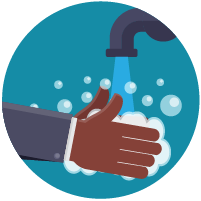
Clean your hands often
- Wash your hands often with soap and water for at least 20 seconds especially after you have been in a public place, or after blowing your nose, coughing, or sneezing.
- If soap and water are not readily available, use a hand sanitizer that contains at least 60% alcohol. Cover all surfaces of your hands and rub them together until they feel dry.
- Avoid touching your eyes, nose, and mouth with unwashed hands.

Avoid close contact
- Avoid close contact with people who are sick
- Put distance between yourself and other people if COVID-19 is spreading in your community. This is especially important for people who are at higher risk of getting very sick.
Take steps to protect others
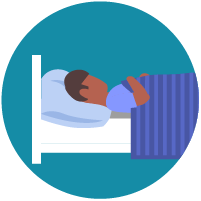
Stay home if you’re sick
- Stay home if you are sick, except to get medical care. Learn what to do if you are sick.
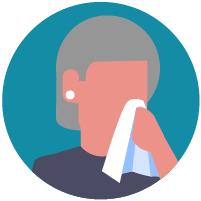
Cover coughs and sneezes
- Cover your mouth and nose with a tissue when you cough or sneeze or use the inside of your elbow.
- Throw used tissues in the trash.
- Immediately wash your hands with soap and water for at least 20 seconds. If soap and water are not readily available, clean your hands with a hand sanitizer that contains at least 60% alcohol.

Wear a facemask if you are sick
- If you are sick: You should wear a facemask when you are around other people (e.g., sharing a room or vehicle) and before you enter a healthcare provider’s office. If you are not able to wear a facemask (for example, because it causes trouble breathing), then you should do your best to cover your coughs and sneezes, and people who are caring for you should wear a facemask if they enter your room. Learn what to do if you are sick.
- If you are NOT sick: You do not need to wear a facemask unless you are caring for someone who is sick (and they are not able to wear a facemask). Facemasks may be in short supply and they should be saved for caregivers.

Clean and disinfect
- Clean AND disinfect frequently touched surfaces daily. This includes tables, doorknobs, light switches, countertops, handles, desks, phones, keyboards, toilets, faucets, and sinks.
- If surfaces are dirty, clean them: Use detergent or soap and water prior to disinfection.
Tuesday, March 3, 2020
World Wildlife Day

On 20 December 2013, at its 68th session, the United Nations General Assembly (UNGA), in its resolution UN 68/205, decided to proclaim 3 March, the day of the adoption of the Convention on International Trade in Endangered Species of Wild Fauna and Flora (CITES) in 1973, as World Wildlife Day, which was proposed by Thailand, to celebrate and raise awareness of the world's wild fauna and flora.
In its resolution, the General Assembly reaffirmed the intrinsic value of wildlife and its various contributions, including ecological, genetic, social, economic, scientific, educational, cultural, recreational and aesthetic, to sustainable development and human well-being.

The General Assembly took note of the outcome of the 16th meeting of the Conference of the Parties to CITES, held in Bangkok from 3 to 14 March 2013, in particular Resolution Conf. 16.1 designating 3 March as World Wildlife Day, in order to celebrate and raise awareness of the world’s wild fauna and flora, and recognized the important role of CITES in ensuring that international trade does not threaten the survival of species.
The General Assembly requested the CITES Secretariat, in collaboration with relevant organizations of the United Nations system, to facilitate the implementation of World Wildlife Day.
Monday, February 3, 2020
Corona Viruse

Coronaviruses are a group of viruses that cause diseases in mammals and birds. In humans, the viruses cause respiratory infections – including the common cold – which are typically mild. Rarer forms such as SARS, MERS and the novel coronavirus causing the 2019–20 Wuhan coronavirus outbreak can be lethal. In cows and pigs coronaviruses cause diarrhea. In chickens they cause an upper respiratory disease. There are no vaccines or antiviral drugs that are approved for prevention or treatment.
Coronaviruses are viruses in the subfamily Orthocoronavirinae in the family Coronaviridae, in the order Nidovirales. Coronaviruses are enveloped viruses with a positive-sense single-stranded RNA genome and with a nucleocapsid of helical symmetry. The genomic size of coronaviruses ranges from approximately 26 to 32 kilobases, the largest for an RNA virus.
The name "coronavirus" is derived from the Latin corona, meaning crown or halo, which refers to the characteristic appearance of the virus particles (virions): they have a fringe reminiscent of a royal crown or of the solar corona.

Coronaviruses were discovered in the 1960s. The earliest ones discovered were infectious bronchitis virus in chickens and two viruses from the nasal cavities of human patients with the common cold that were subsequently named human coronavirus 229E and human coronavirus OC43. Other members of this family have since been identified, including SARS-CoV in 2003, HCoV NL63 in 2004, HKU1 in 2005, MERS-CoV in 2012, and 2019-nCoV in 2019; most of these have been involved in serious respiratory tract infections.
Drone

An unmanned aerial vehicle (UAV) (or uncrewed aerial vehicle,commonly known as a drone) is an aircraft without a human pilot on board and a type of unmanned vehicle. UAVs are a component of an unmanned aircraft system (UAS); which include a UAV, a ground-based controller, and a system of communications between the two. The flight of UAVs may operate with various degrees of autonomy: either under remote control by a human operator or autonomously by onboard computers.
Compared to crewed aircraft, UAVs were originally used for missions too "dull, dirty or dangerous" for humans. While they originated mostly in military applications, their use is rapidly expanding to commercial, scientific, recreational, agricultural, and other applications,such as policing and surveillance, product deliveries, aerial photography, smuggling, and drone racing. Civilian UAVs now vastly outnumber military UAVs, with estimates of over a million sold by 2015.[citation needed]

The term drone, more widely used by the public, was coined in reference to the early remotely-flown target aircraft used for practice firing of a battleship's guns, and the term was first used with the 1920s Fairey Queen and 1930's de Havilland Queen Bee target aircraft. These two were followed in service by the similarly-named Airspeed Queen Wasp and Miles Queen Martinet, before ultimate replacement by the GAF Jindivik.
The term unmanned aircraft system (UAS) was adopted by the United States Department of Defense (DoD) and the United States Federal Aviation Administration in 2005 according to their Unmanned Aircraft System Roadmap 2005–2030.[8] The International Civil Aviation Organization (ICAO) and the British Civil Aviation Authority adopted this term, also used in the European Union's Single-European-Sky (SES) Air-Traffic-Management (ATM) Research (SESAR Joint Undertaking) roadmap for 2020.[9] This term emphasizes the importance of elements other than the aircraft. It includes elements such as ground control stations, data links and other support equipment. A similar term is an unmanned-aircraft vehicle system (UAVS), remotely piloted aerial vehicle (RPAV), remotely piloted aircraft system (RPAS).
A UAV is defined as a "powered, aerial vehicle that does not carry a human operator, uses aerodynamic forces to provide vehicle lift, can fly autonomously or be piloted remotely, can be expendable or recoverable, and can carry a lethal or nonlethal payload".Therefore, missiles are not considered UAVs because the vehicle itself is a weapon that is not reused, though it is also uncrewed and in some cases remotely guided.

Under new regulations which came into effect June 1, 2019, the term RPAS (Remotely Piloted Aircraft System) has been adopted by the Canadian Government to mean "a set of configurable elements consisting of a remotely piloted aircraft, its control station, the command and control links and any other system elements required during flight operation".
The relation of UAVs to remote controlled model aircraft is unclear.[citation needed] UAVs may or may not include model aircraft. Some jurisdictions base their definition on size or weight; however, the US Federal Aviation Administration defines any uncrewed flying craft as a UAV regardless of size. For recreational uses, a drone (as opposed to a UAV) is a model aircraft that has first-person video, autonomous capabilities, or both.
Thursday, January 30, 2020
Martyrs' Day

In India, there are five days declared as Martyrs' Day (at national level also known as Sarvodaya day). They are named in honor of those who are recognized as martyrs for the nation.
30 January is the date observed in the national level. The date was chosen as it marks the assassination of Mohandas Karamchand Gandhi Ji in 1948, by Nathuram Godse.On Martyr's Day the president, the vice president, the prime minister, the defence minister, and the three Service Chiefs gather at the samadhi at Raj Ghat memorial and lay wreaths decorated with multi-colour flowers. The armed forces personnel blow bugles sounding the Last Post. The inter-services contingent reverse arms as a mark of respect. A two-minute silence in memory of Indian martyrs is observed throughout the country at 11 am. Participants hold all-religion prayers and sing tributes.
The Father of Nation, Mahatma Gandhi was assassinated by Nathuram Godse in the Birla House during his evening prayers on 30 January, 1948. Gandhiji was a freedom fighter, a simple man with huge determination, a man who had sacrificed his life for the independence, welfare, and development of India.

Nathuram Godse was trying to justify his crime by holding Gandhiji and saying that he is responsible for the partition of the country and the killing of thousands during the freedom struggle. He called Gandhiji a pretender and in no way felt guilty for his crime. On 8th November, Godse was sentenced to death. So, on this day i.e. 30 January Bapu breathed his last and was martyred. The Government of India announced the day as Shaheed Diwas or Martyr’s Day.
Saraswati Puja

Saraswati is the Hindu goddess of knowledge, music, art, wisdom, and learning.She is a part of the trinity (Tridevi) of Saraswati, Lakshmi, and Parvati. All the three forms help the trinity of Brahma, Vishnu, and Shiva to create, maintain, and regenerate the Universe, respectively.
The earliest known mention of Saraswati as a goddess is in the Rigveda. She has remained significant as a goddess from the Vedic period through modern times of Hindu traditions.Some Hindus celebrate the festival of Vasant Panchami (the fifth day of spring, and also known as Saraswati Puja and Saraswati Jayanti in so many parts of India) in her honour,and mark the day by helping young children learn how to write the letters of the alphabet on that day.The Goddess is also revered by believers of the Jain religion of west and central India,as well as some Buddhist sects.

Saraswati, is a Sanskrit fusion word of saras (सरस्) meaning "pooling water", but also sometimes translated as "speech"; and vati (वती) meaning "she who possesses". Originally associated with the river or rivers known as Saraswati, this combination, therefore, means "she who has ponds, lakes, and pooling water" or occasionally "she who possesses speech". It is also a Sanskrit composite word of surasa-vati (सुरस-वति) which means "one with plenty of water".
The word Saraswati appears both as a reference to a river and as a significant deity in the Rigveda. In initial passages, the word refers to the Sarasvati River and is mentioned as one among several northwestern Indian rivers such as the Drishadvati. Saraswati, then, connotes a river deity. In Book 2, the Rigveda describes Saraswati as the best of mothers, of rivers, of goddesses.
Tuesday, January 28, 2020
Vasant Panchami

Vasant Panchami, also spelled Basant Panchami, is a festival that marks the preliminary preparations for the arrival of spring, celebrated by people in various ways depending upon the region in the Indian subcontinent. The Vasant Panchami also marks the start of preparation for Holika and Holi, which take place forty days later.The Vasant Utsava (festival) on Panchami is celebrated forty days before Spring, because any season's transition period is 40 days, and after that the season comes in to full bloom.

Saturday, January 25, 2020
Republic Day


India achieved independence from British Raj on 15 August 1947 following the Indian independence movement. The independence came through the Indian Independence Act 1947 (10 & 11 Geo 6 c 30), an Act of the Parliament of the United Kingdom that partitioned British India into the two new independent Dominions of the British Commonwealth (later Commonwealth of Nations).India obtained its independence on 15 August 1947 as a constitutional monarchy with George VI as head of state and the Earl Mountbatten as governor-general. The country, though, did not yet have a permanent constitution; instead its laws were based on the modified colonial Government of India Act 1935.On 29 August 1947, a resolution was moved for the appointment of Drafting Committee, which was appointed to draft a permanent constitution, with Dr B R Ambedkar as chairman. While India's Independence Day celebrates its freedom from British Rule, the Republic Day celebrates the coming into force of its constitution. A draft constitution was prepared by the committee and submitted to the Constituent Assembly on 4 November 1947.The Assembly met, in sessions open to public, for 166 days, spread over a period of two years, 11 months and 18 days before adopting the Constitution. After many deliberations and some modifications, the 308 members of the Assembly signed two hand-written copies of the document (one each in Hindi and English) on 24 January 1950. Two days later which was on 26 January 1950, it came into effect throughout the whole nation. On that day, Dr. Rajendra Prasad's began his first term of office as President of the Indian Union. The Constituent Assembly became the Parliament of India under the transitional provisions of the new Constitution.

Wednesday, January 22, 2020
Subhas Chandra Bose

Subhas Chandra Bose (23 January 1897 – 18 August 1945)was an Indian nationalist whose defiant patriotism made him a hero in India,but whose attempt during World War II to rid India of British rule with the help of Nazi Germany and Imperial Japan left a troubled legacy. The honorific Netaji (Hindustani: "Respected Leader"), first applied in early 1942 to Bose in Germany by the Indian soldiers of the Indische Legion and by the German and Indian officials in the Special Bureau for India in Berlin, was later used throughout India.
Bose had been a leader of the younger, radical, wing of the Indian National Congress in the late 1920s and 1930s, rising to become Congress President in 1938 and 1939.However, he was ousted from Congress leadership positions in 1939 following differences with Mahatma Gandhi and the Congress high command.He was subsequently placed under house arrest by the British before escaping from India in 1940.

Bose arrived in Germany in April 1941, where the leadership offered unexpected, if sometimes ambivalent, sympathy for the cause of India's independence, contrasting starkly with its attitudes towards other colonised peoples and ethnic communities.In November 1941, with German funds, a Free India Centre was set up in Berlin, and soon a Free India Radio, on which Bose broadcast nightly. A 3,000-strong Free India Legion, comprising Indians captured by Erwin Rommel's Afrika Korps, was also formed to aid in a possible future German land invasion of India.By spring 1942, in light of Japanese victories in southeast Asia and changing German priorities, a German invasion of India became untenable, and Bose became keen to move to southeast Asia.Adolf Hitler, during his only meeting with Bose in late May 1942, suggested the same, and offered to arrange for a submarine. During this time Bose also became a father; his wife, or companion,Emilie Schenkl, whom he had met in 1934, gave birth to a baby girl in November 1942.Identifying strongly with the Axis powers, and no longer apologetically, Bose boarded a German submarine in February 1943.In Madagascar, he was transferred to a Japanese submarine from which he disembarked in Japanese-held Sumatra in May 1943.
सृजनगीत
बिखरे मन को जोड़-जोड़ नव जीवन सफल बनाएँ ,
कर संचित समभाव सकल विभावो से राष्ट्र सजाएँ ,
दुःखी न हो कण-कण भारत का सृजन गीत हम गाएँ | दुःखी न हों.......
स्वार्थ रहित अभिमान रहित , निजकार्य निरत हो जाएँ
सबके सुख में सुख के अनुभव की रूचि हम गाएँ
व्यथित व्यथा से यदि समाजहोकरण को दूर भगाएँ
मूलछीनकार सुखी बनाएँ गीत राग का गाएँ | दुखी न हो..........
जब तक निज का भान रहेगा आएँगी बाधाएँ,
पर का भाव उदय होते ही सुख सिंधु लहराएँ ,
सजग-सजग होऐं मेरे संगी , हम मिलकर युक्ति बनाएँ ,
अटल सिंधु की गहराई में , उनको आज डुबाएं | दुखी न हो ........
आज समय की विषम घडी चहुँ और दिखाई देती हैं
जान संकुल में घृणा भाव की विष वल्लरी दिखाई देती हैं
आज जरुरत हैं हम सबको सोऐं मानस को जगाएँ ,
निज सुकर्म की प्रखर धुप से जड़ को शुष्क बनाएँ | दुखी न हो ........
जातिवाद अलगाववाद की ज्वाला धधक रही है
राष्ट्र चेतना बुझी-बुझी सी धुंधली आज हुई हैं
उसकी आभा को लौटाएँ स्वर्णिम अतीत दोहराएं दोहराएं
परंपरा आधुनितम मिश्रण से हम सजें सजाएँ | दुखी न हो .........
उमड़ पड़े गाँधी की धरा नेताजी के स्वर गूंजे
मातृ भूमि के लाल निराले सिंघनाद सा घोष करे
भगत सिंह की याद शहीदी अपने मानस से लाएँ
आजाद तिलक के मदिर चरित से कण-कण को महकाएँ | दुखी न हो........
मातृ भूमि की गोद कभी लालो के शव को न देखे
बहे कभी न खून यहाँ पर न माँए आंसू बहाएँ
खेत खेत में वैभव बरसे हर्षित फैसले लहराएं
आभाव मुक्त हो सृजित रहें और हर्ष-हर्ष हर्षाएँ | दुखी न हो .......
बहे वसंती हवा यहाँ पर शांतिशीलता आए
मदिर मलय से भीनी-भीनी या तृत्व सरलता लाए
राम राज्य की ज्योति तले श्रद्धा के हार बनाएं
पहन-पहन भारत के जन-जन को फिर से सजाएं | दुखी न हो........
यदि पथ पर मिल जाएँ गूणी गुण को हम शिस नवाएँ
यदि पथ पर मिल जाएँ श्रमि हर्षित हो गले लगाएँ ,
मैत्री का संचार करे मिल सुख दुःख सुने सुनायें,
व्यास प्रणीत शांति के मार्ग में हम चले चलाएँ |
दुखी न हो कण-कण भारत का सृजन गीत हम गायें | दुखी न हो........
-देवी दत्त दीक्षित
"व्यथित"
प्र o स्नातक शिक्षक
(संस्कृत)
Saturday, January 11, 2020
Anonymous

Anonymous is a decentralized international hacktivist group that is widely known for its various DDoS cyber attacks against several governments, government institutions and government agencies, corporations, and the Church of Scientology.
Anonymous originated in 2003 on the imageboard 4chan representing the concept of many online and offline community users simultaneously existing as an anarchic, digitized global brain.Anonymous members (known as Anons) can be distinguished in public by the wearing of Guy Fawkes masks in the style portrayed in the graphic novel and film V for Vendetta.However, this may not always be the case as some of the collective prefer to instead cover their face without using the well-known mask as a disguise. Some anons also opt to mask their voices through voice changers or text-to-speech programs.

In its early form, the concept was adopted by a decentralized online community acting anonymously in a coordinated manner, usually toward a loosely self-agreed goal and primarily focused on entertainment . Beginning with Project Chanology in 2008—a series of protests, pranks, and hacks targeting the Church of Scientology—the Anonymous collective became increasingly associated with collaborative hacktivism on a number of issues internationally. Individuals claiming to align themselves with Anonymous undertook protests and other actions (including direct action) in retaliation against copyright-focused campaigns by motion picture and recording industry trade associations. Later targets of Anonymous hacktivism included government agencies of the U.S., Israel, Tunisia, Uganda, and others; the Islamic State of Iraq and the Levant; child pornography sites; copyright protection agencies; the Westboro Baptist Church; and corporations such as PayPal, MasterCard, Visa, and Sony. Anons have publicly supported WikiLeaks and the Occupy movement. Related groups LulzSec and Operation AntiSec carried out cyber attacks on U.S. government agencies, media, video game companies, military contractors, military personnel, and police officers, resulting in the attention of law enforcement to the groups' activities.
Hacker

A computer hacker is any skilled computer expert that uses their technical knowledge to overcome a problem. While "hacker" can refer to any skilled computer programmer, the term has become associated in popular culture with a "security hacker", someone who, with their technical knowledge, uses bugs or exploits to break into computer systems.
Today, mainstream usage of "hacker" mostly refers to computer criminals, due to the mass media usage of the word since the 1980s. This includes what hacker slang calls "script kiddies", people breaking into computers using programs written by others, with very little knowledge about the way they work. This usage has become so predominant that the general public is largely unaware that different meanings exist. While the self-designation of hobbyists as hackers is generally acknowledged and accepted by computer security hackers, people from the programming subculture consider the computer intrusion related usage incorrect, and emphasize the difference between the two by calling security breakers "crackers" (analogous to a safecracker).
The controversy is usually based on the assertion that the term originally meant someone messing about with something in a positive sense, that is, using playful cleverness to achieve a goal. But then, it is supposed, the meaning of the term shifted over the decades and came to refer to computer criminals.

As the security-related usage has spread more widely, the original meaning has become less known. In popular usage and in the media, "computer intruders" or "computer criminals" is the exclusive meaning of the word today. (For example, "An Internet 'hacker' broke through state government security systems in March.") In the computer enthusiast (Hacker Culture) community, the primary meaning is a complimentary description for a particularly brilliant programmer or technical expert. (For example, "Linus Torvalds, the creator of Linux, is considered by some to be a hacker.") A large segment of the technical community insist the latter is the "correct" usage of the word (see the Jargon File definition below).
Friday, January 10, 2020
National Youth Day

National Youth Day is celebrated on 12 January being the birthday of Swami Vivekananda. In 1984 the Government of India declared this day as National Youth Day and since from 1985 the event is celebrated in India every year.It was a decision of Government of India taken in 1984 to celebrate the birthday of great Swami Vivekananda, i.e. 12 January, as National Youth Day every year. The Government of India quoted that ' the philosophy of Swamiji and the ideals for which he lived and worked could be a great source of inspiration for the Indian Youth Day.'On 12 January 2013, Former Indian Prime Minister Manmohan Singh told in his address at the inauguration of four-year-long celebrations of Swami Vivekananda's 150th birth anniversary.
What Gandhiji said captures the great importance of spreading Swami Vivekananda's ideas and ideals among the youth in our country today. He personified the eternal energy of the youth and their restless quest for truth. It is entirely fitting that the Government of India has declared 12th January, the birthday of Swami Vivekananda, as National Youth Day. We must work to rekindle the eternal message of this great patriot and son of India.

The National Youth Day is observed all over India at schools and colleges, with processions, speeches, music, youth conventions, seminars, Yogasanas, presentations, competitions in essay-writing, recitations and sports on 12 January every year. Swami Vivekananda's lectures and writings, deriving their inspiration from Indian spiritual tradition and the broad outlook of his Master Sri Ramakrishna Paramahansa. These were the source of inspiration and have motivated numerous youth organizations, study circles and service projects involving the youth.
Tuesday, January 7, 2020
Windows 11

Windows 11 Release Date Features Concept ISO Microsoft: Windows 11 is the most comprehensive, comprehensive, and modernized operating system in Microsoft’s Windows history. This is a complete rethinking of the concept of Windows, taking into account the negative feedback from users of Windows 11. Windows 11 is a personalized operating system, one for all types of devices from smart phones and tablets to personal computers, with the ability to create multiple desktops and switch between them. Instead of locating the software systems locally on your computer, all the key components are in the cloud storage, which allows for regular updates of both the elements themselves and the cloud.

New / Exquisite Start Button:
The controversy about the disappearance of the start button was a big part of the furor and the noise over Windows 8. There is an assumption that Microsoft can return it in the desktop versions of Windows 11, in a more refined and better way.
Radical reworking of the user interface:
I doubt that 100%. Windows 11 is a soft deployment of Windows 8, the word stress is soft. Microsoft will try to harm this update as little as possible. I believe that there will be no noticeable changes, and nothing aggressive.
Deeper integration with bing:
I believe that is true. Microsoft continues to work with Bing and I think that Windows 11 will not be an exception. There will be many opportunities in the next version of Microsoft Windows to integrate search into the OS.
Deeper integration with Azure for cloud storage:
I hope that Microsoft will continue pushing to use Azure for cloud storage. Microsoft, by the way, can integrate parts of the OS into cloud documents / file storage.
Advanced Power Management:
This is already expected. Microsoft did an excellent job with Windows 8 and Windows 8.1 with power management. Microsoft is expected to make the OS more efficient in newer versions of Windows.
Improved gesture integration:
It will be relevant if Microsoft tries to add gesture recognition to Windows 11. I expect the company to go beyond the initial steps taken in Windows 8.1 (especially in the culinary application). Using computer gestures will be great if they can succeed in this.
Improved security:
I expect enhanced security features in Windows 11, including fingerprint recognition. Microsoft did an excellent job of security, continuing to block Windows with every major release.
Only 64 bits?
This is a long legend. Over the past 6 years, we have made assumptions that Microsoft will switch to an exclusively 64 bit system. I doubt this will happen in this release. Once again I draw your attention to the fact that this will not be a controversial issue, but as smooth as possible, without problems and experiences. At least Microsoft has to hope so.
That’s all there is at the moment, I will continue to update this page as new information becomes available.
What is Cortana in Windows 11?
Windows 11 will get the extension Cortana, a competitor to Siri and Google Now from Microsoft. It will be in all versions of the new, including interactive panels, laptops and tablets. Microsoft’s Joe Belfiore showed off Cortana’s new PC-oriented features during its introduction on January 21.
Cortana will be a digital assistant for easy access to files, applications, and other information.
What are universal Windows 11 applications?
Microsoft is developing special versions for key applications, such as Office, for phones and 8-inch tablets with Windows 11.
Applications such as Word, PowerPoint, Excel and Outlook will look and feel almost identical to their desktop counterparts, but will be optimized for the touch screen and its size. Through the Microsoft cloud infrastructure, all your files will be accessible on these devices, no matter where they were created.
Based on the January 21st event, Microsoft confirmed that the most important component of the universal applications, Office 2016, will be launched in the second half of 2015. This potentially puts Office 2016 ahead of Windows 11 in terms of release.
What is Continuum in Windows 11?
During the January 21 event, Microsoft demonstrated its “continuum” approach to developing Windows 11.
Continuum is designed to adapt Windows to the form factor of the equipment on which it works.
As in the example of Surface Pro 3. When the tablet is connected to an overlay to the keyboard, Surface Pro 3 works like a laptop, which technically it is. Then, as soon as the keyboard is removed, a small icon appears at the bottom right of the screen, asking if you want to activate tablet mode.
This action changes all applications to full screen, which makes the icons a bit larger and allows users to access the initial screen as in Windows 8, but much more updated. As soon as you plug in the keyboard, the device prompts you to return to the original mode.
What is Spartan in Windows 11?
The Spartan project is a new version of Internet Explorer from the company.
Some new features of this new browser:
The ability to tag web pages before sharing them with others. The ability to comment on the same pages at the software level. Embedded offline reading and PDF support
Native Cortana Support and Integration:
Spartan is not a replacement for Internet Explorer, it is a second browser. Microsoft explained that while Spartan will work with the rest of the network, IE11 will be saved for compatibility with previous versions and corporate sites.
Xbox integration with Windows 11:
The application has collected all the games that have ever been played on any Xbox or Windows 11 device, a universal list of friends and an activity tape. Each device with Windows 11 will receive an already installed Xbox application.
Users will be able to record game sessions through Game DVR tools and share them via the Xbox network. In fact, Windows 11 will transfer automated accounting functions to Xbox One for games on Windows 11 – even those that are launched using other applications, such as Steam, for example.
It will also be possible to broadcast any Xbox One game to any Windows 11 device inside the house, using Wi-Fi.

What will the corporate license look like in Windows 11?
As we discussed in detail here, Microsoft has published its plans to promote Windows 11 for corporate users: through the Windows Software Assurance program.
At the same time, this program will offer several ways to upgrade the arsenal of systems to the new OS for corporate users, which means that it is not free for both custom versions of Windows 11.
The SA program is designed to give corporate customers more control over when and how updates are launched in their range of machines. Of course, the idea is to focus on security and IT flexibility with the help of additional long-term service departments that provide security updates and only critical updates, prohibiting updates to new features.


